
· StromHold Technologies · Automation · 2 min read
Why approval workflows stall — and how to fix them
Most approval delays are not a people problem. They are a design problem. Here is how to find where work gets stuck and rebuild the path around it.
Ask any operations leader where their week goes and you will hear the same answer: chasing approvals. A request sits in an inbox. Someone is on leave. A document is missing a signature. The cost is rarely a single dramatic failure — it is a slow, daily tax on everyone involved.
The instinct is to blame the people. The reality is almost always the design of the process.
The three places work gets stuck
When we map an approval process during a discovery sprint, delays cluster in three predictable places:
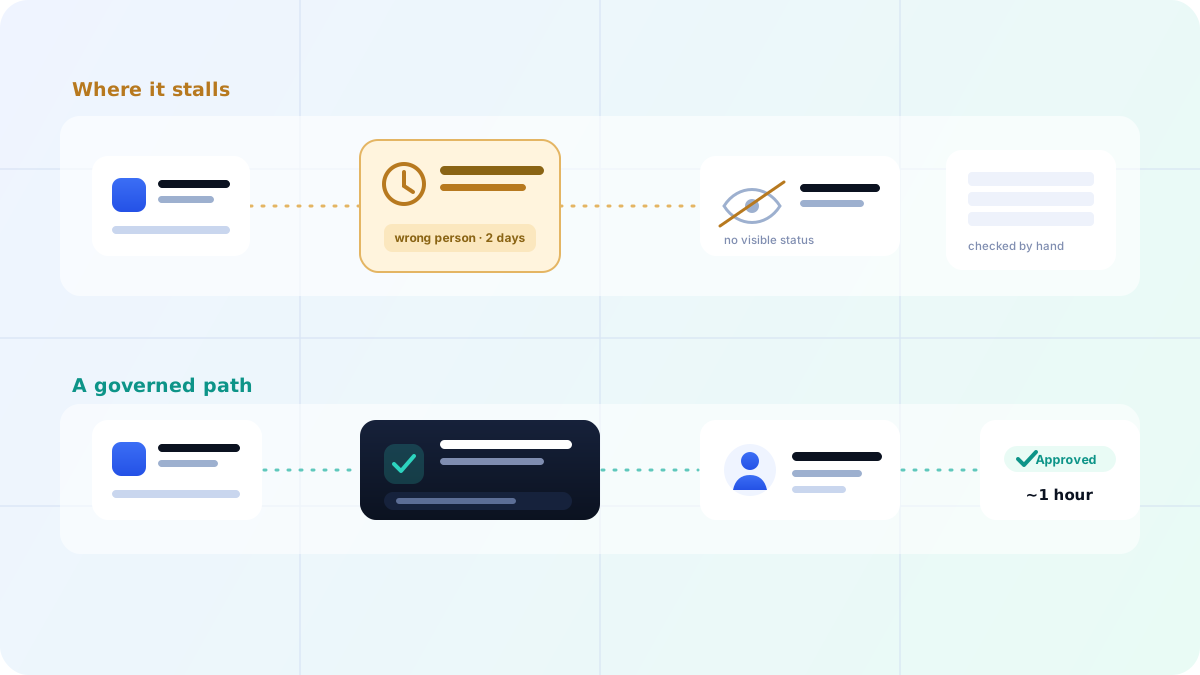
- Unclear routing. Nobody is sure who approves what, so requests bounce or wait. A request that should take an hour waits two days because it landed with the wrong person.
- Invisible status. Once a request leaves someone’s hands, they cannot see where it is. So they email to ask, which interrupts the very person they are waiting on.
- Manual validation. Approvers spend their time checking budgets, policies, and completeness by hand — work a machine should do before the request ever reaches them.
What a fix actually looks like
A governed workflow removes each of these by design, not by asking people to try harder.
- Deterministic routing. Rules decide who sees a request based on its type, amount, and department. The right approver is assigned automatically, with cover for absences built in.
- Always-on visibility. Everyone involved can see exactly where a request sits and what it is waiting on, in real time. The “just checking in” emails disappear.
- Validation before sign-off. Policy and budget checks run automatically, so approvers only ever see requests that are already complete and compliant.
The result is measurable
This is not a vague promise of “efficiency.” Once routing, visibility, and validation are automated, the numbers move. In the programs we have delivered, approval cycle times typically fall by around 40%, and the volume of status-chasing messages drops to near zero.
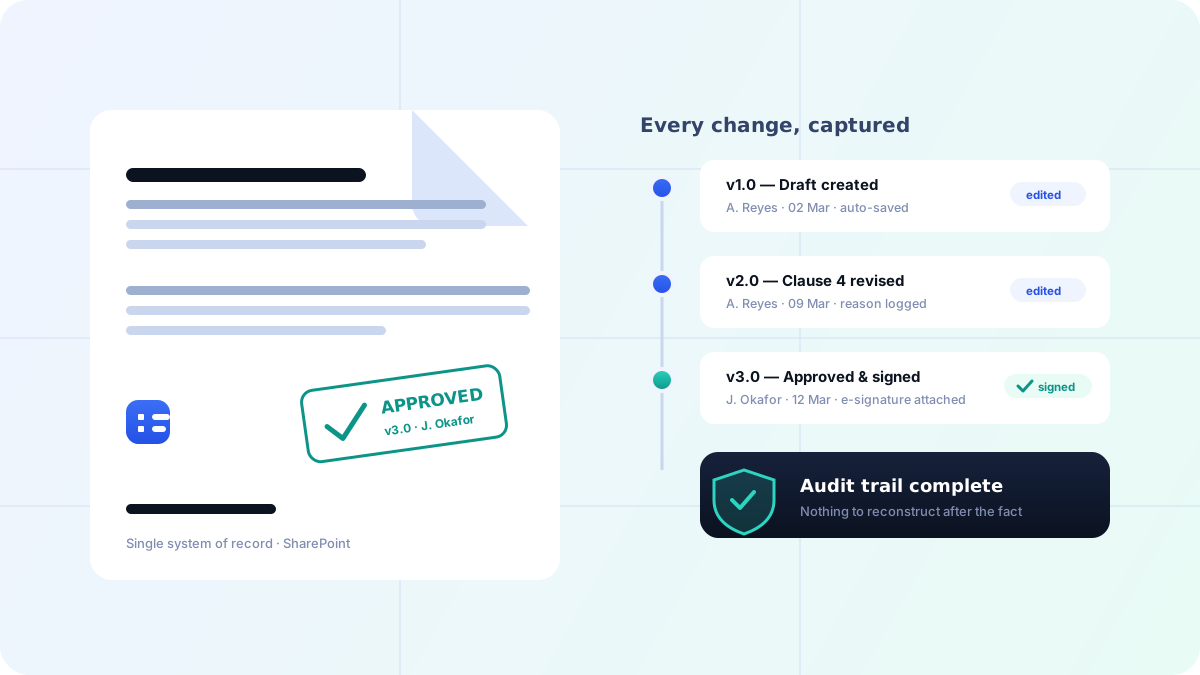
The work that remains for humans is the part that actually needs judgment. Everything else — the routing, the reminders, the checks, the audit trail — runs on its own.
If your team spends its week chasing approvals, the process is telling you where it is broken. The fix is to redesign the path, not to push harder along the old one.