
· StromHold Technologies · Compliance · 2 min read
Document compliance that survives an audit
An audit is not the time to discover your version history has gaps. Build the trail as the work happens, and the review becomes a formality.
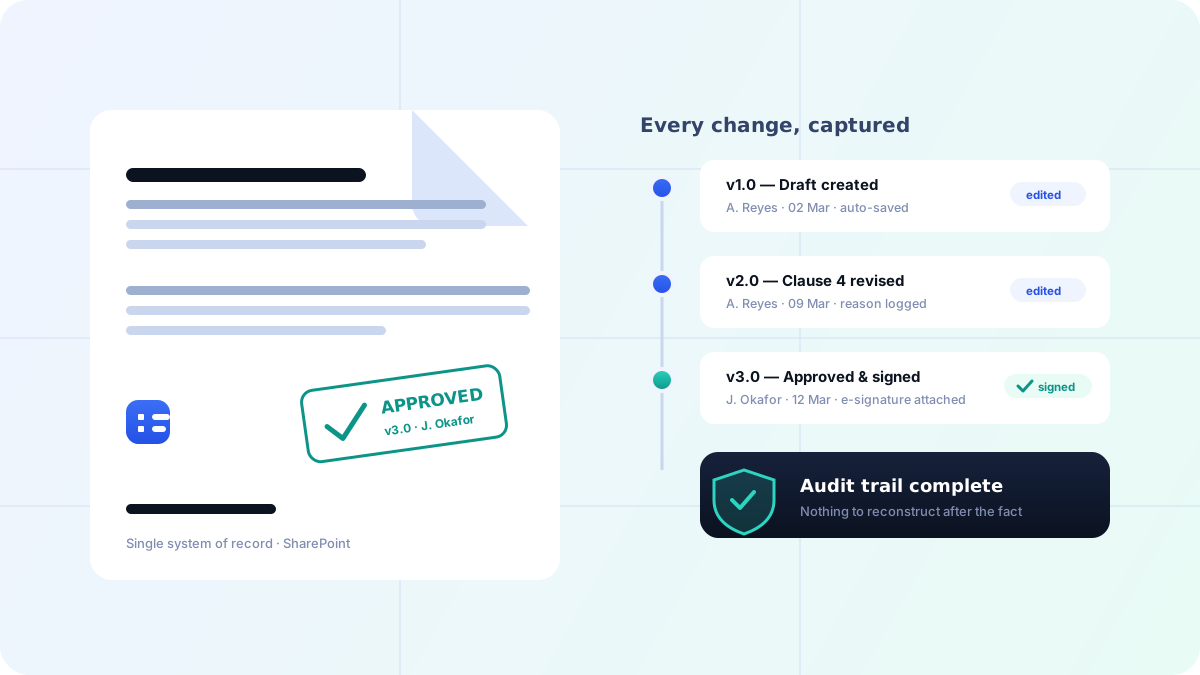
The painful audits are the ones where the document trail has to be reconstructed after the fact. Who approved this version? Why did this clause change? Where is the signed copy? When the answers live in scattered emails and someone’s memory, a routine review turns into a fire drill.
It does not have to. The trail an auditor wants is the same trail a well-designed workflow produces automatically — if you build it as the work happens rather than at the end.
Make the system of record obvious
The first failure is ambiguity about where the real document lives. If there are three copies in three inboxes, none of them is authoritative. A single system of record — typically SharePoint Online for the teams we work with — means there is one place to look and one version that counts.
Track versions automatically
Every meaningful change should create a version, with who changed it and when, captured without anyone having to remember to do it. Automated version tracking turns “I think this was the final draft” into a definitive history you can point to.
Bake approvals into the document lifecycle
Sign-off should be part of the document’s journey, not a separate email thread. When approval is a workflow step, the record of who approved which version — and when — is created as a by-product. There is nothing to assemble later because it was never separate.
Retain and dispose on purpose
Compliance is not only about keeping records; it is about keeping them for the right length of time and disposing of them when you should. Retention rules, applied automatically, keep what must be kept and remove what should not linger — which is also a core part of staying GDPR-aligned.
The audit becomes a formality
When the system of record is clear, versions are tracked, approvals are part of the lifecycle, and retention runs on rules, an audit stops being an event you brace for. The trail already exists, complete and consistent. You are not reconstructing anything — you are just showing what the system recorded as the work was done.
That is the real goal of document compliance: not a heroic effort at review time, but a process that quietly produces a defensible record every single day.