
· StromHold Technologies · Power Platform · 2 min read
A practical guide to governing Power Platform at scale
Low-code is powerful right up until nobody knows what has been built or who owns it. Governance is what keeps Power Platform an asset rather than a liability.
Microsoft Power Platform is one of the fastest ways to put working software in front of a team. That is exactly why it gets out of hand. A few apps become a few hundred. Flows run against production data with no owner. Sensitive information moves through connectors nobody reviewed. The speed that made low-code attractive becomes the reason it is hard to trust.
Governance is what turns that risk back into an asset. It does not mean locking everything down — it means putting sensible guardrails in place so people can keep building safely.
Start with environments
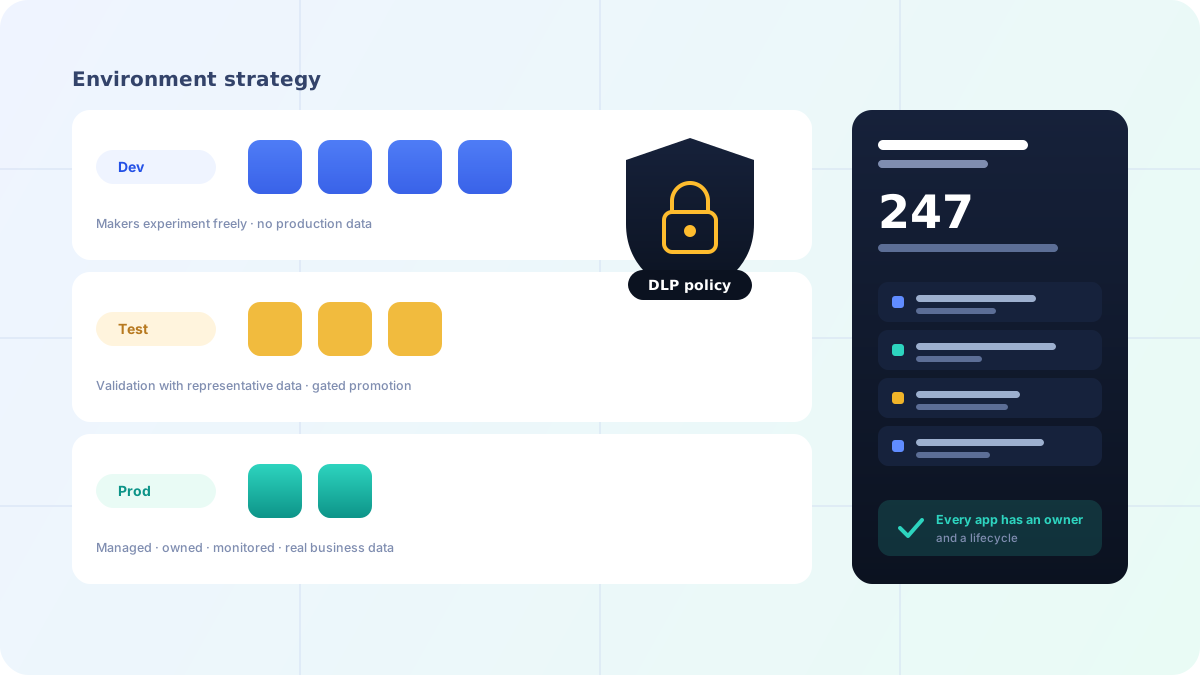
The single most effective control is a clear environment strategy. Development, test, and production should be separate, with data loss prevention policies that match the sensitivity of each. Makers experiment in a default environment; anything touching real business data graduates to a managed one with proper controls.
Know what exists
You cannot govern what you cannot see. The Power Platform Center of Excellence toolkit, or a lightweight equivalent, gives you an inventory of every app and flow, who built it, when it last ran, and what it connects to. That inventory is the difference between confident management and quiet anxiety.
Define ownership and lifecycle
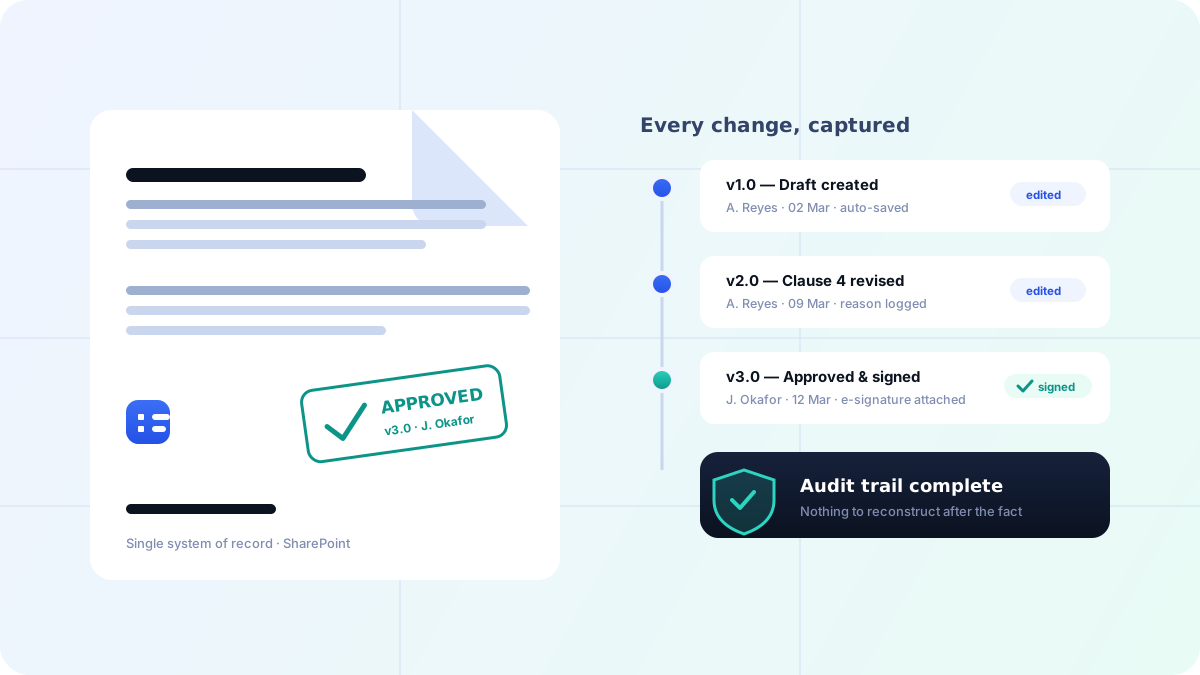
Every app needs an owner and an answer to a simple question: what happens when the person who built it leaves? Orphaned flows are how outages happen. A basic lifecycle — review, ownership transfer, and retirement of unused apps — prevents the slow accumulation of fragile, unmaintained automation.
Apply data loss prevention deliberately
DLP policies decide which connectors can be combined. The goal is not to block everything; it is to stop the genuinely risky combinations — say, a connector that reads HR data sitting next to one that posts to the public internet. Set policies per environment so the controls match the stakes.
Govern without killing momentum
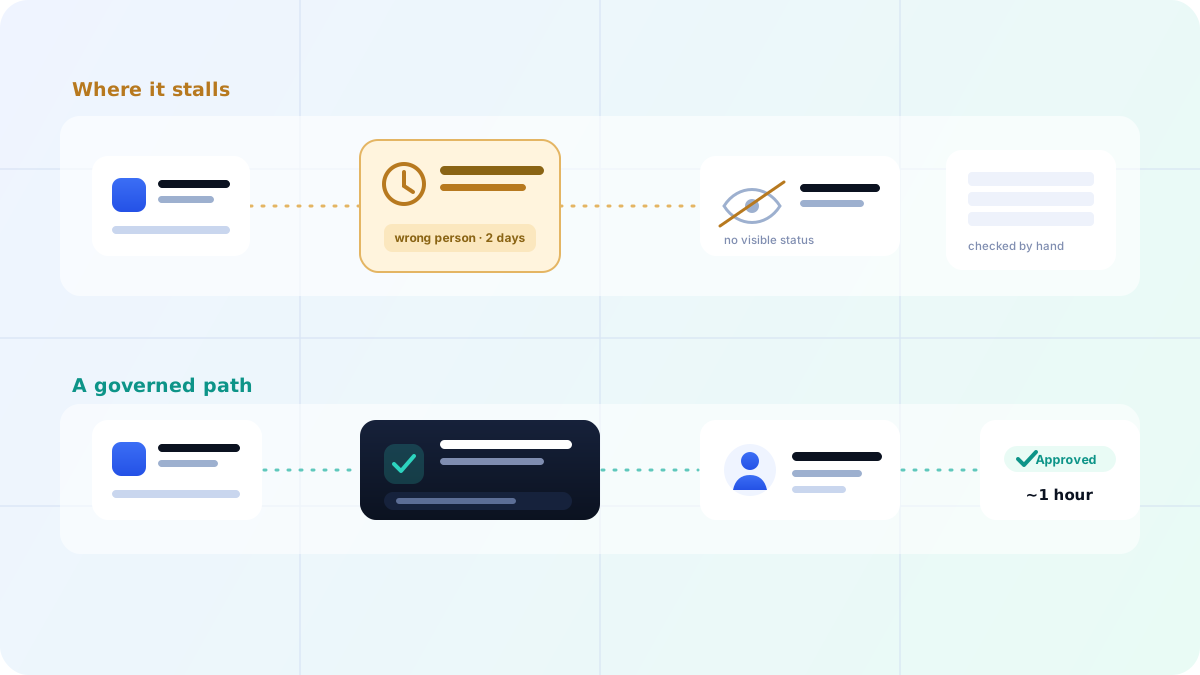
The trap is treating governance as a gate that slows everyone down. Done well, it is mostly invisible: makers get a safe space to build, IT gets visibility and control, and the organization gets the speed of low-code without the sprawl.
Power Platform rewards the teams that put this structure in place early. The ones that do not usually call us once the sprawl has already happened — and untangling it is always more work than getting ahead of it.